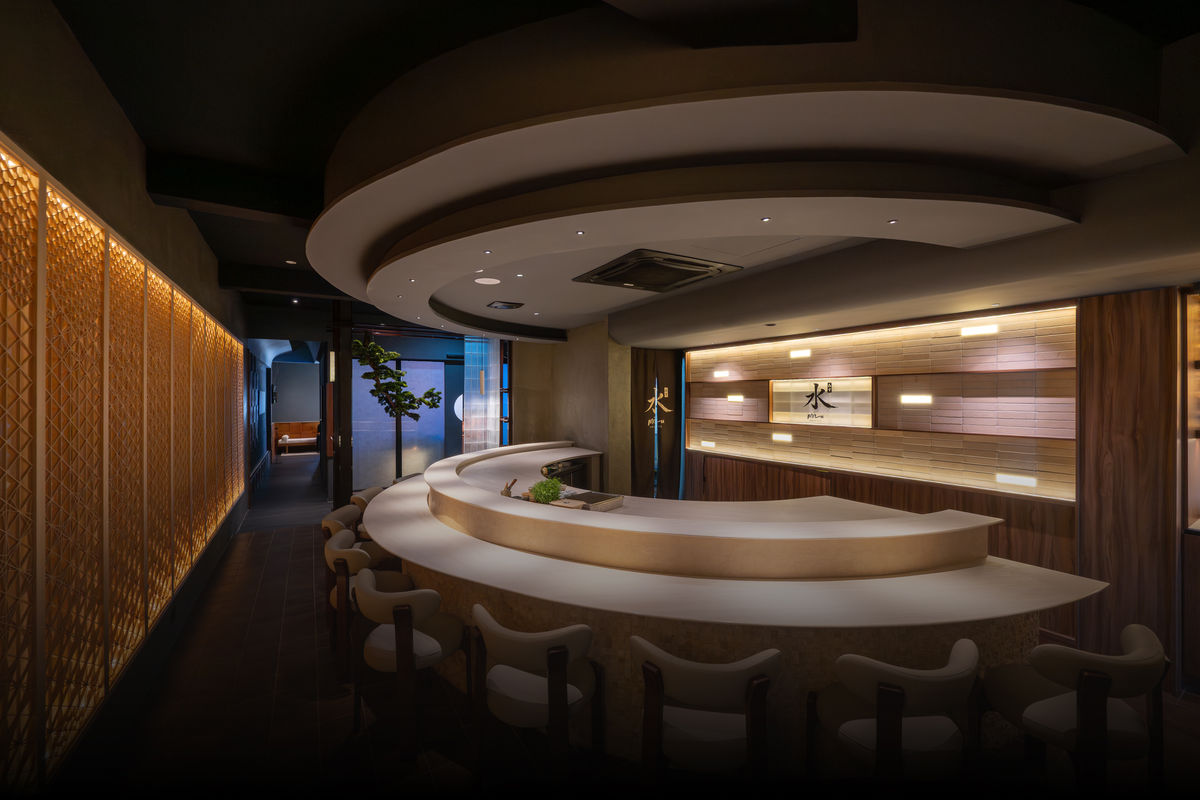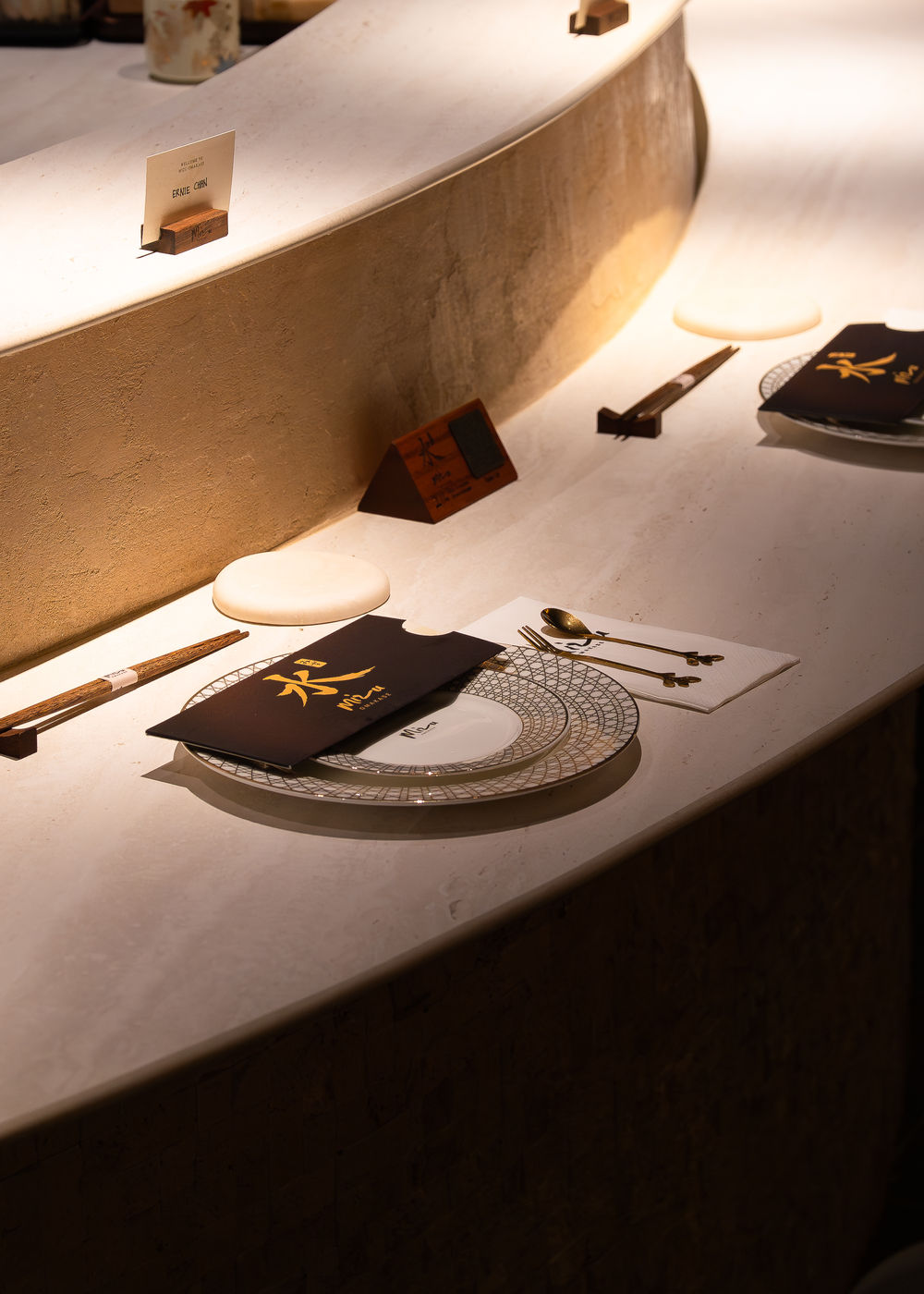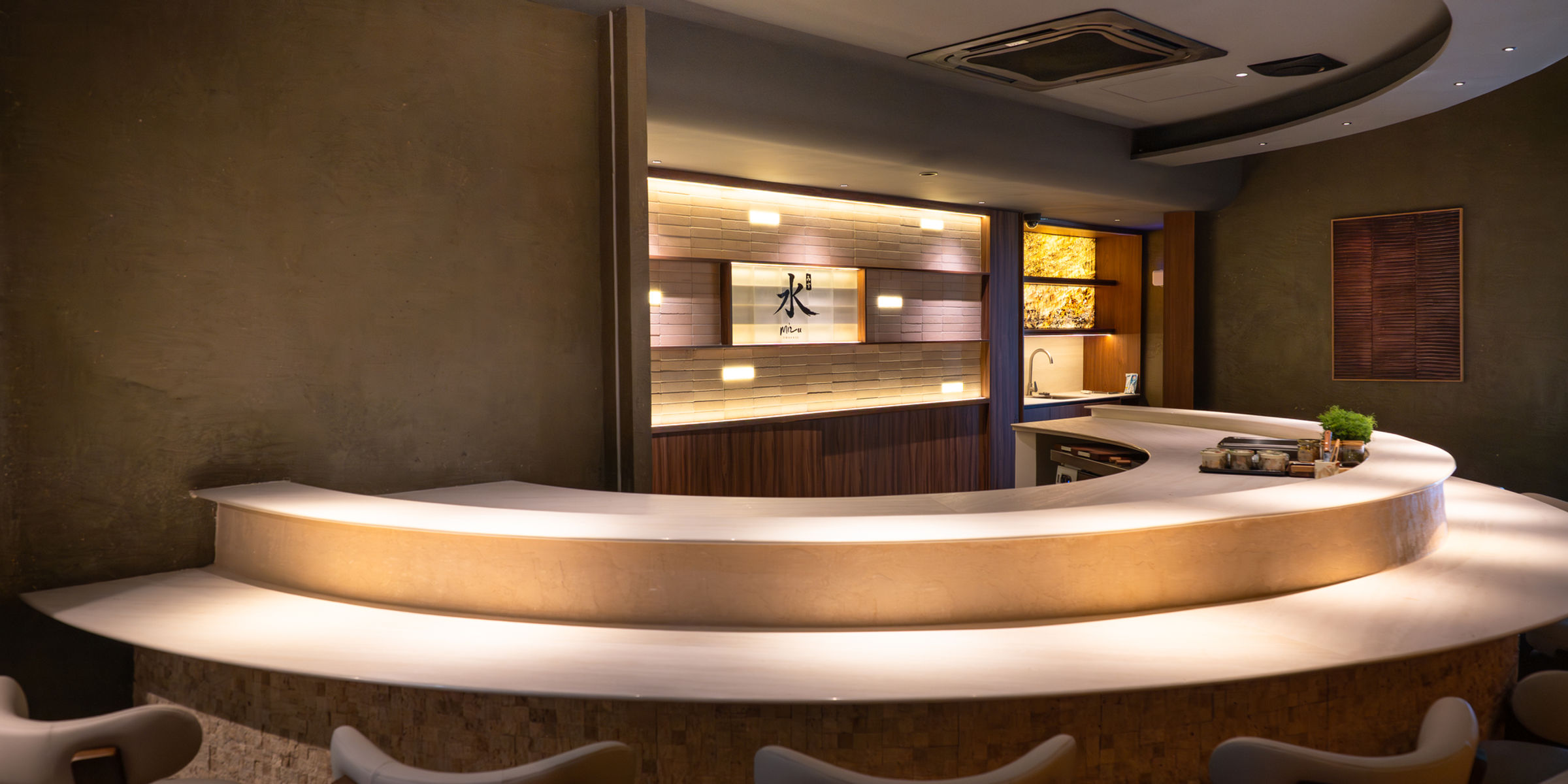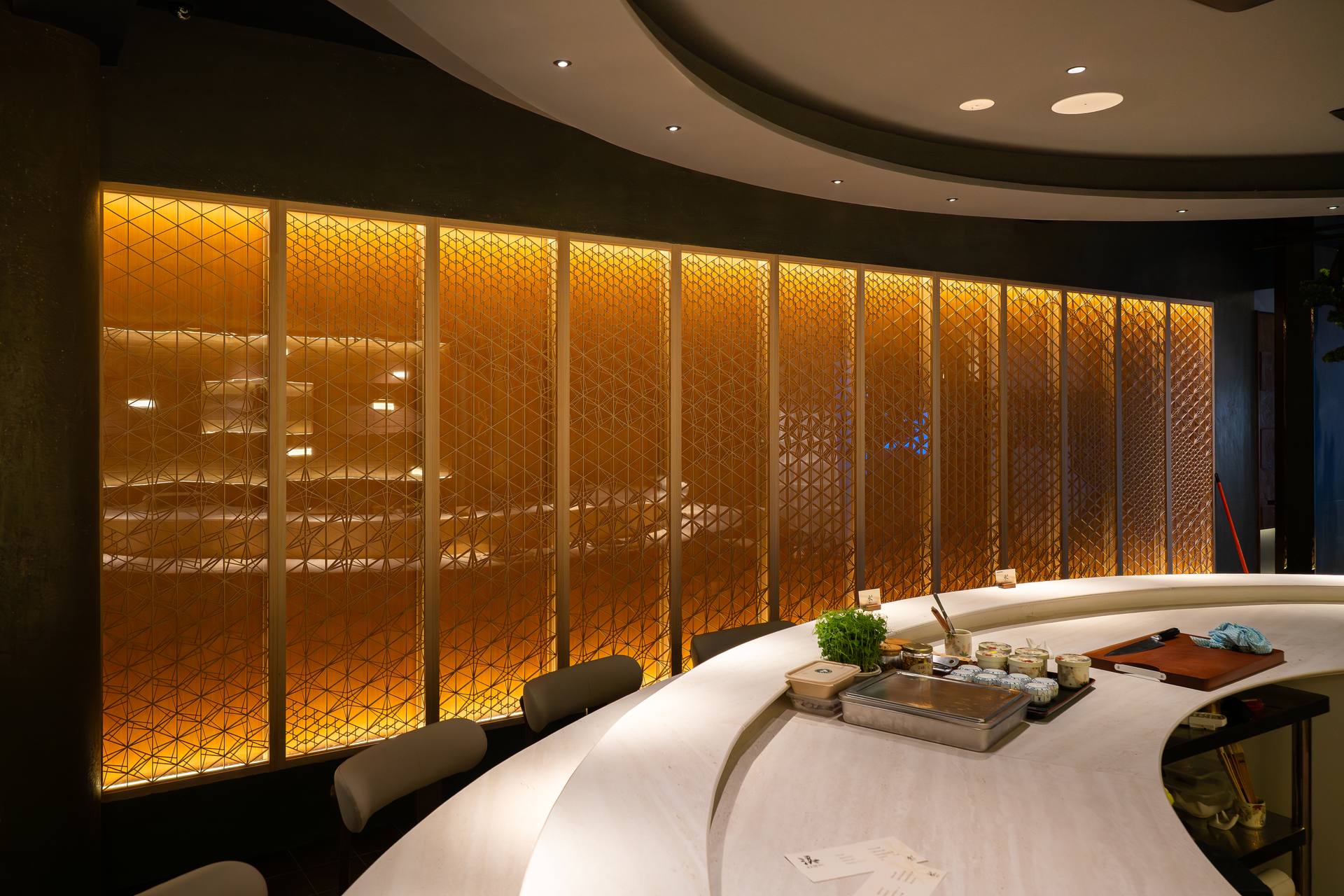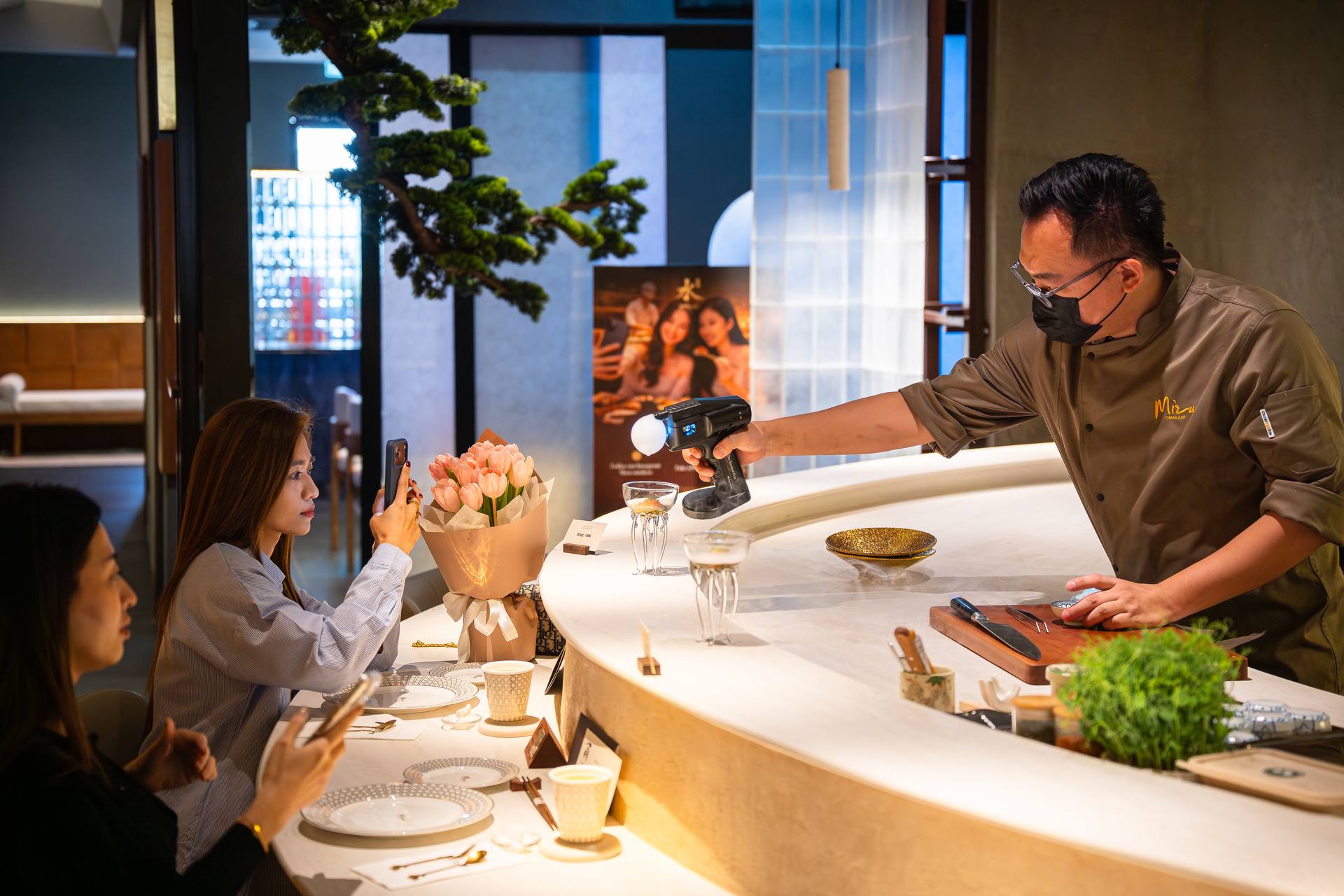
A counter for twelve.
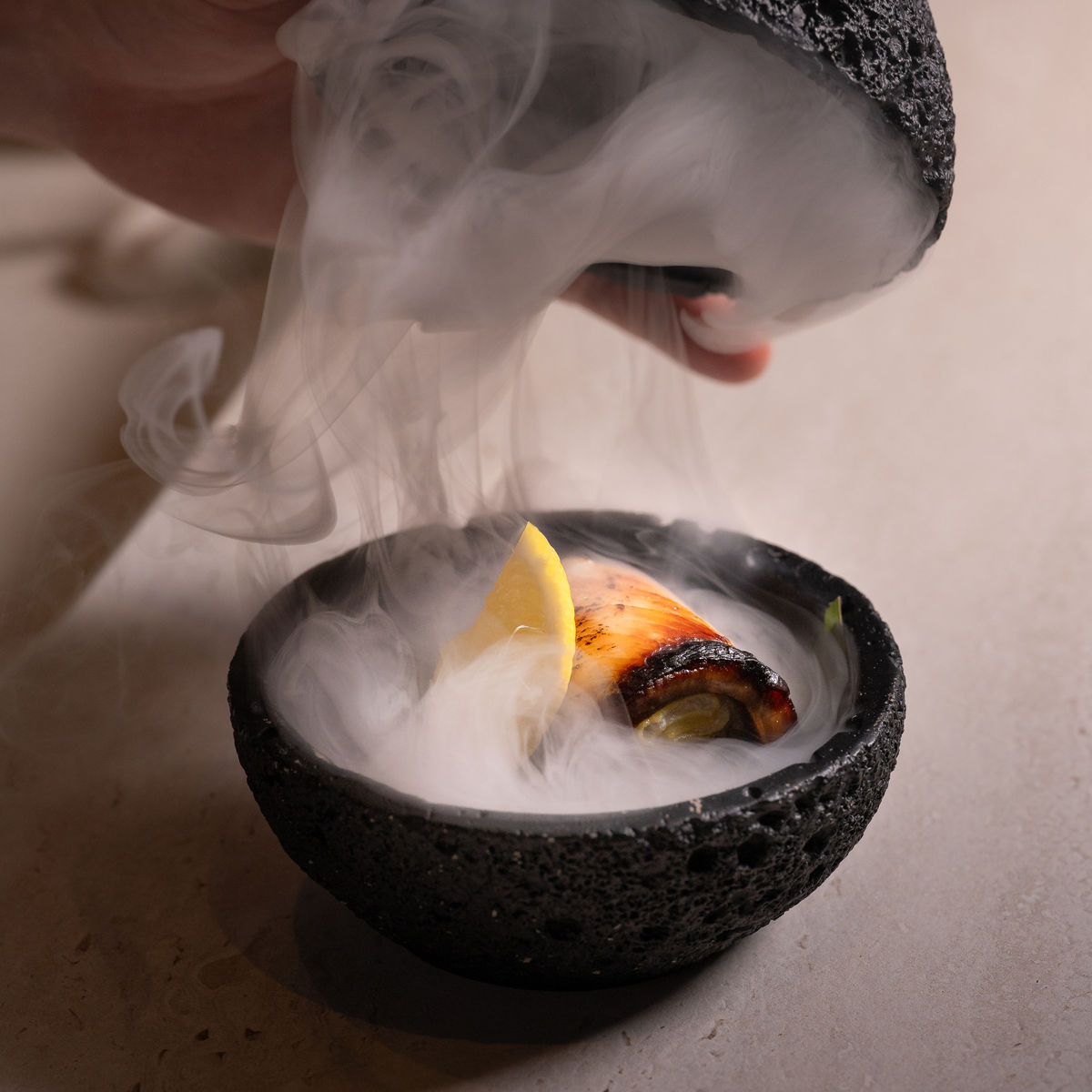
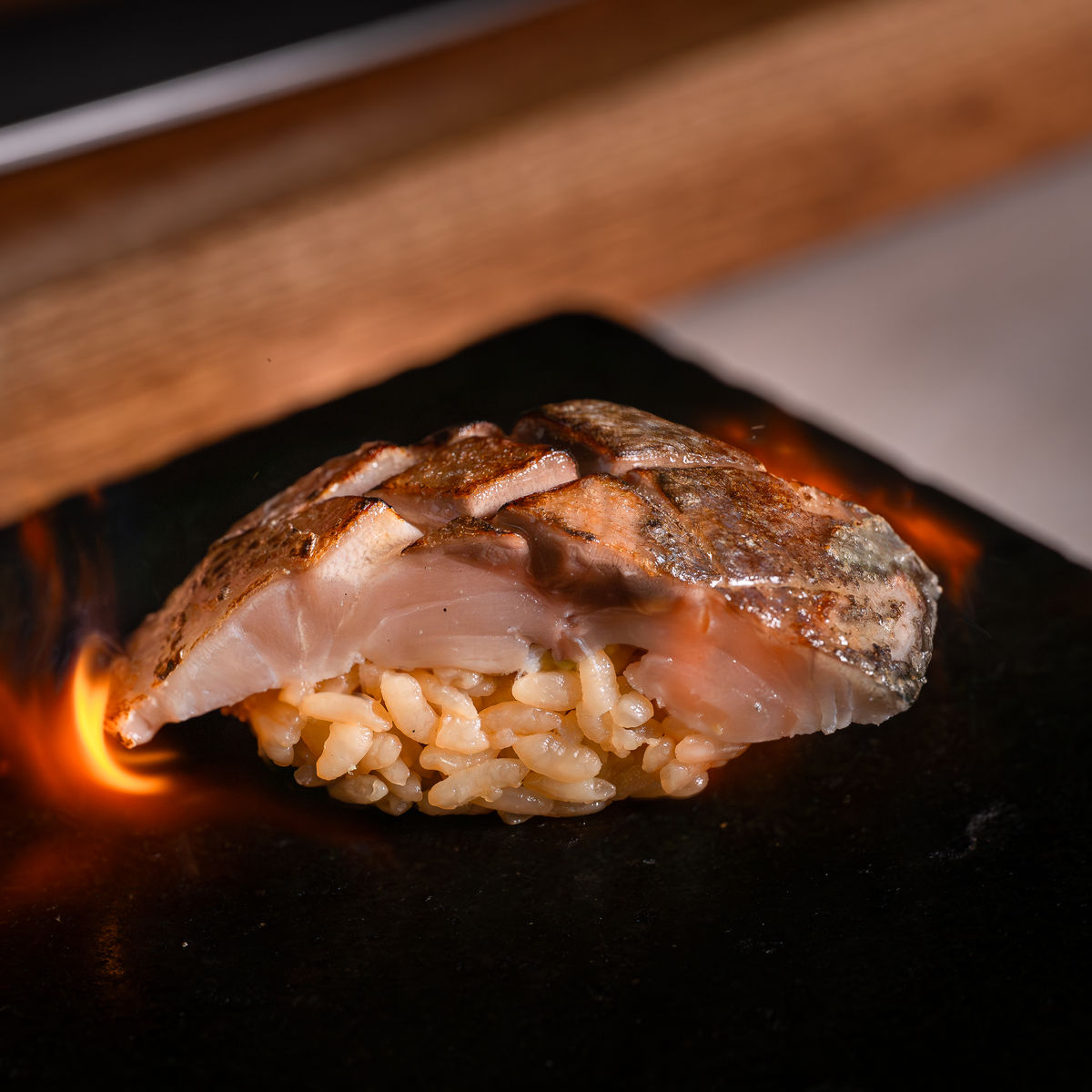
We built Mizu with a single question in mind: what would it feel like to dine as though you were the only guest in the room? The answer — and the restaurant — is a curved hinoki counter for twelve, where each seat carries the same sightline to the chef's hands, to the fire, to the ice, to the moment when a piece of fish becomes something more.
There are no tables. There is no menu. There is only tonight, and the quiet agreement between chef and guest: I leave it up to you.
Head Chef
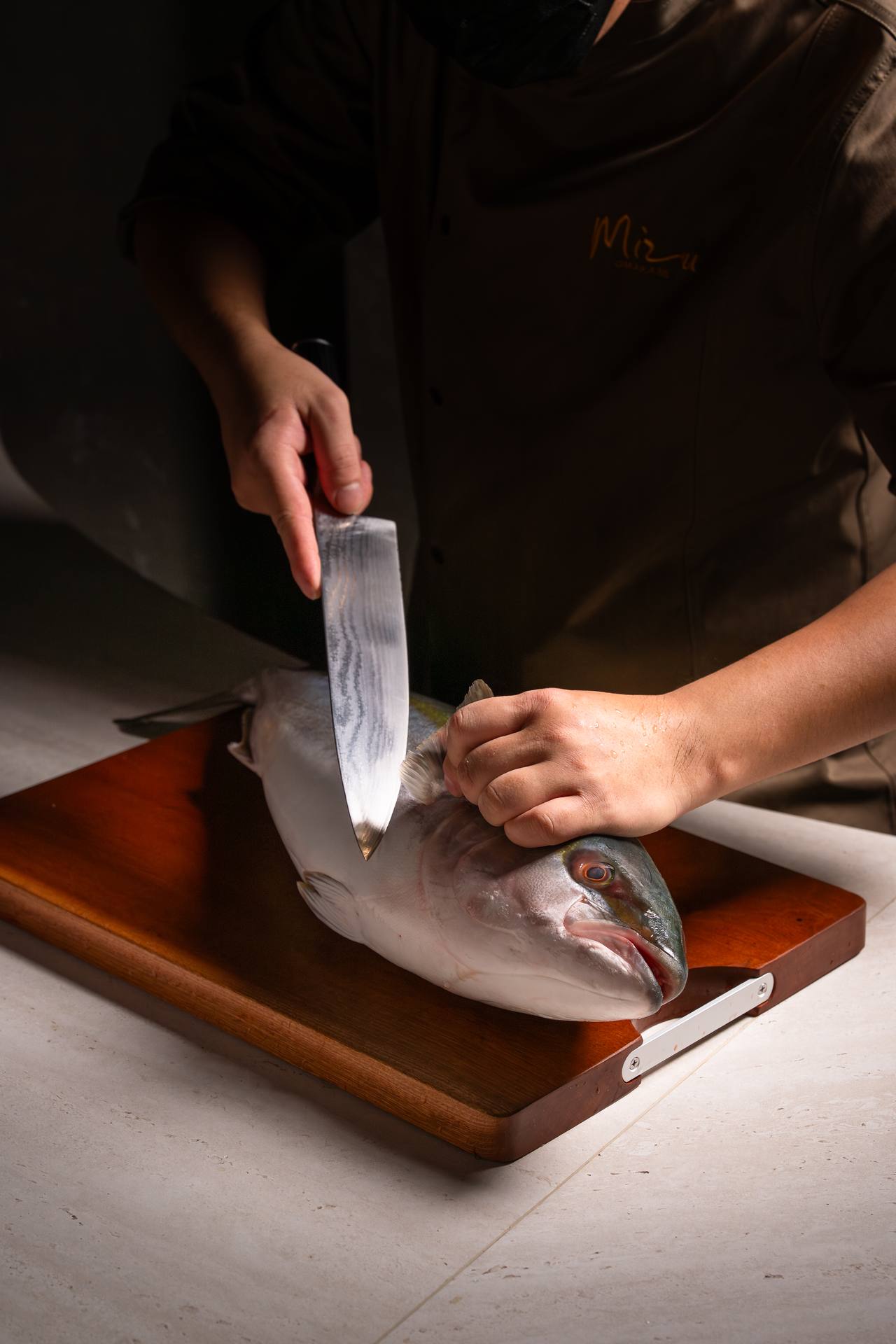
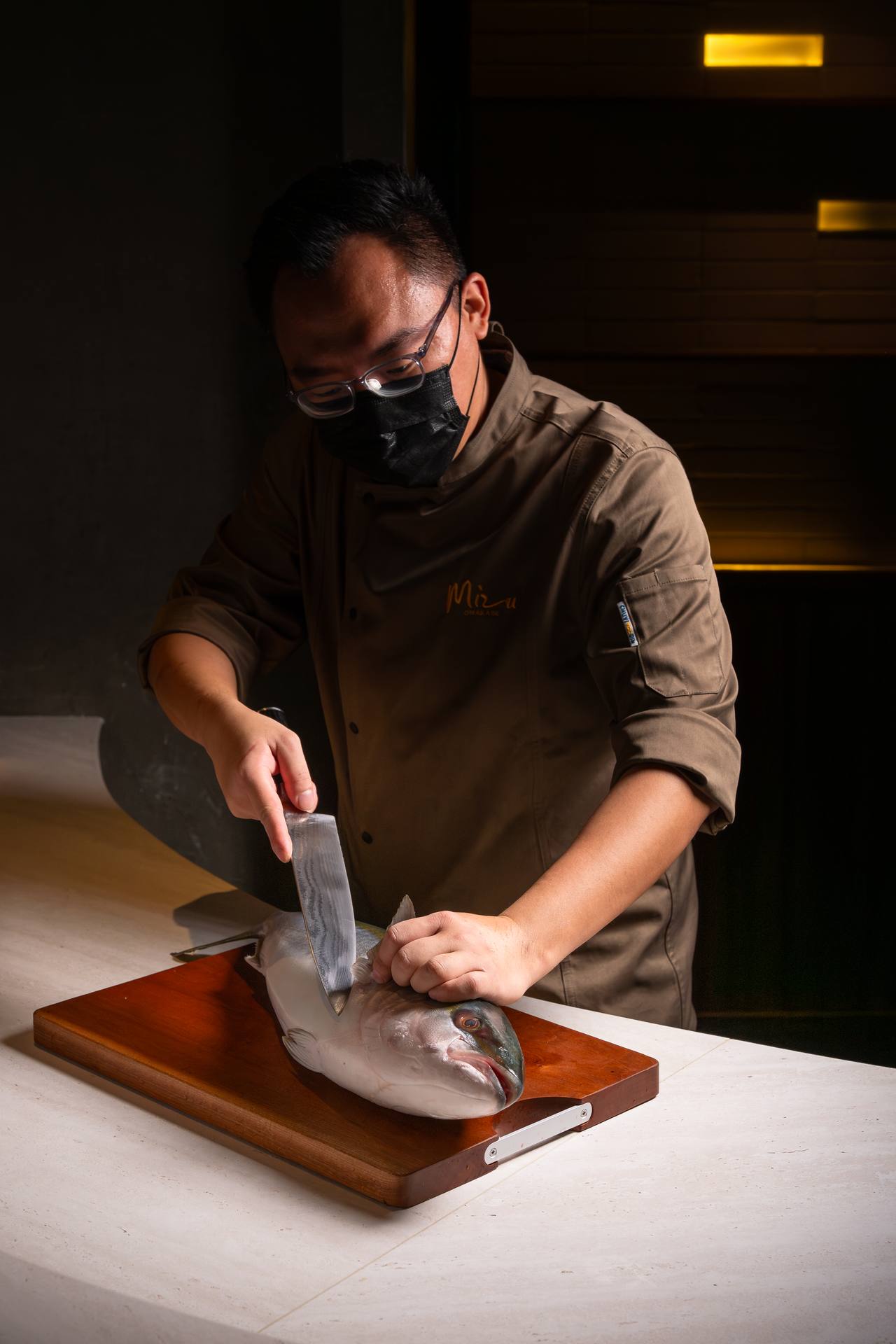
Our head chef began his apprenticeship at seventeen, scrubbing cutting boards in a small Tokyo itamae before the first light of each morning. Over the next two decades he trained in Edomae technique in Tokyo, Kyoto kaiseki sensibility in Kyoto, and modern omakase restraint in Osaka — before returning to Malaysia to build a restaurant of his own.
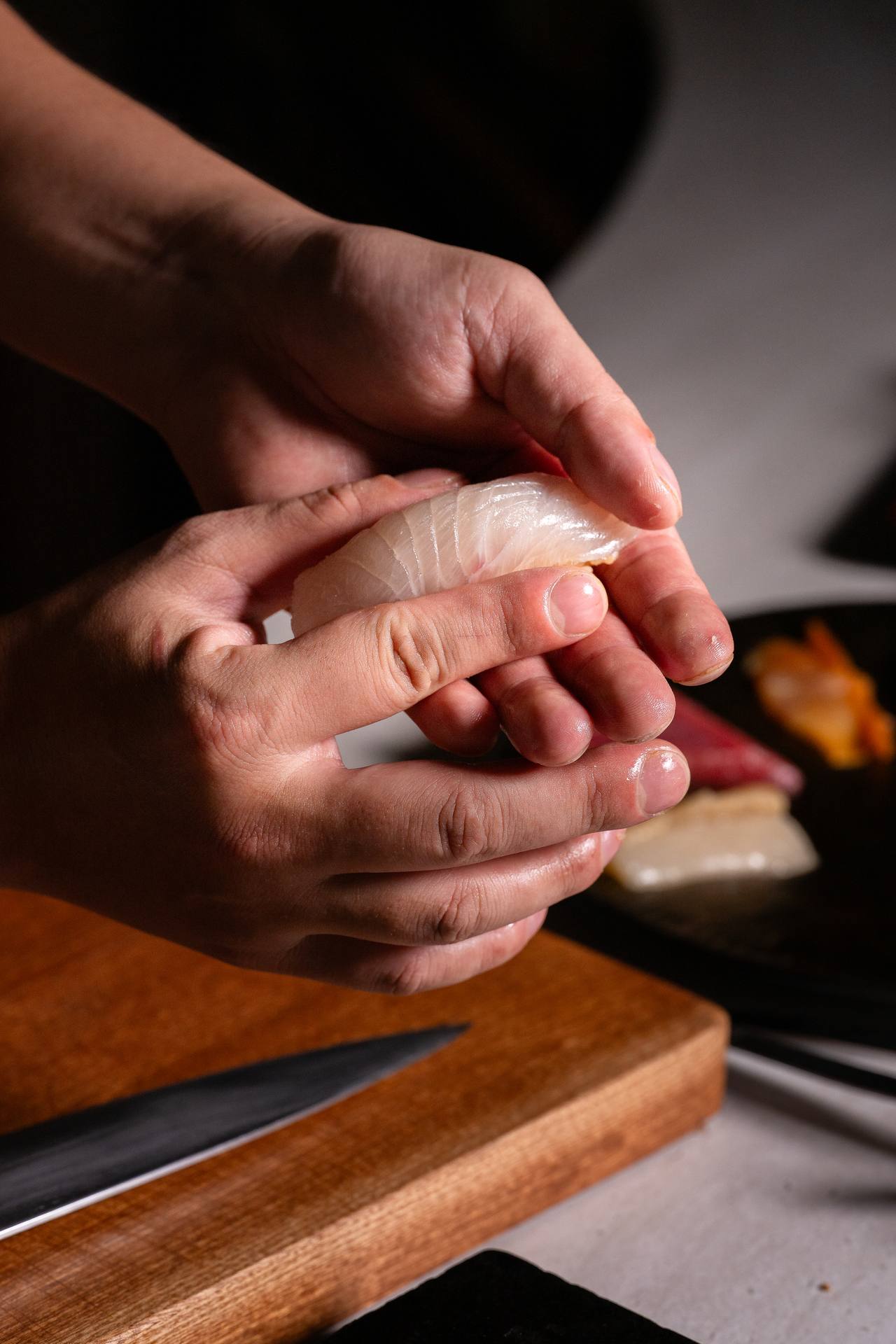
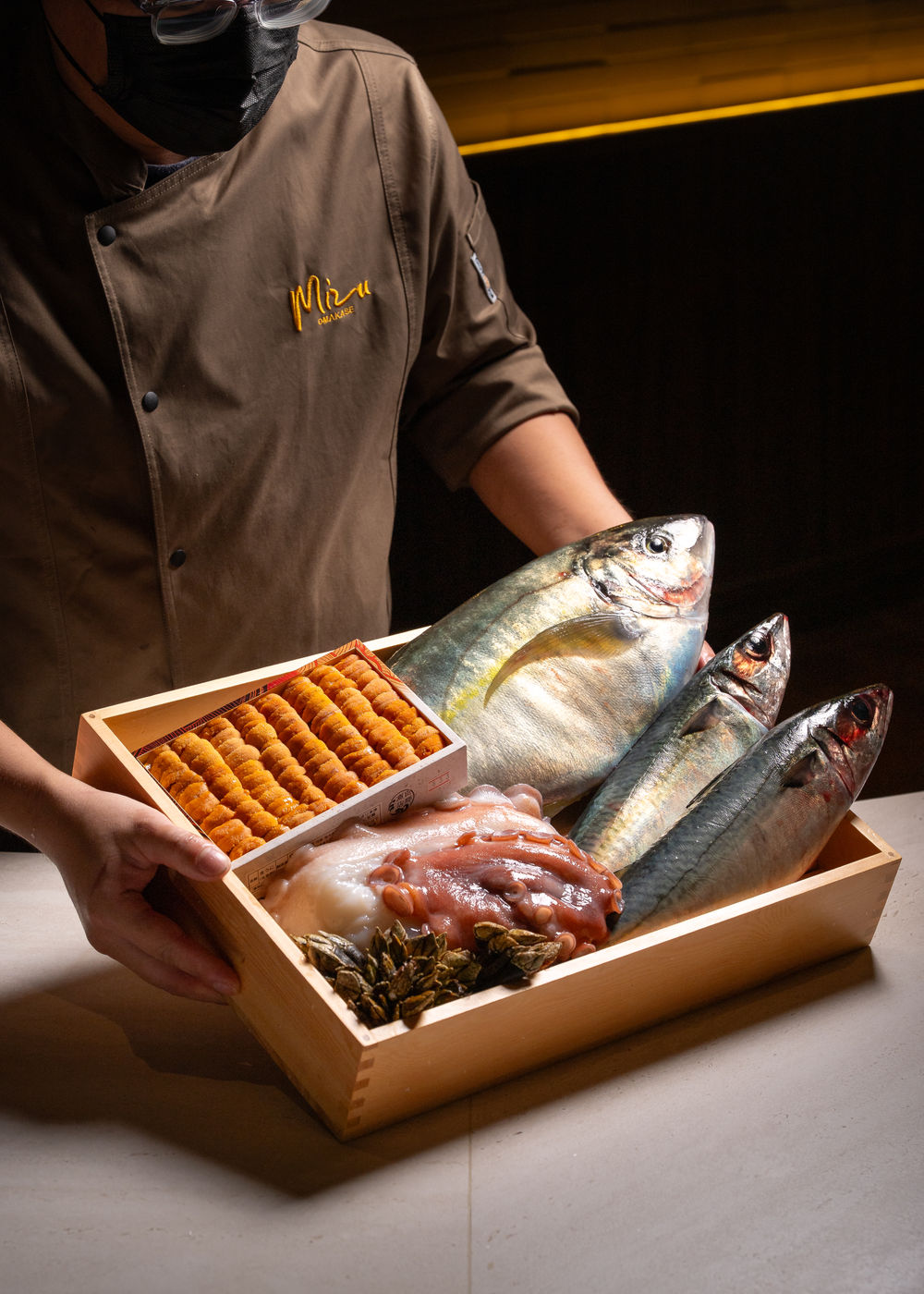
His style is neither traditionalist nor modern; it is personal. An unhurried hand. A deliberate cut. Seasoning so precise you notice its absence more than its presence. He sources from Toyosu twice weekly, always travels with his own knives, and has never used a timer in a kitchen.
The season is our menu.
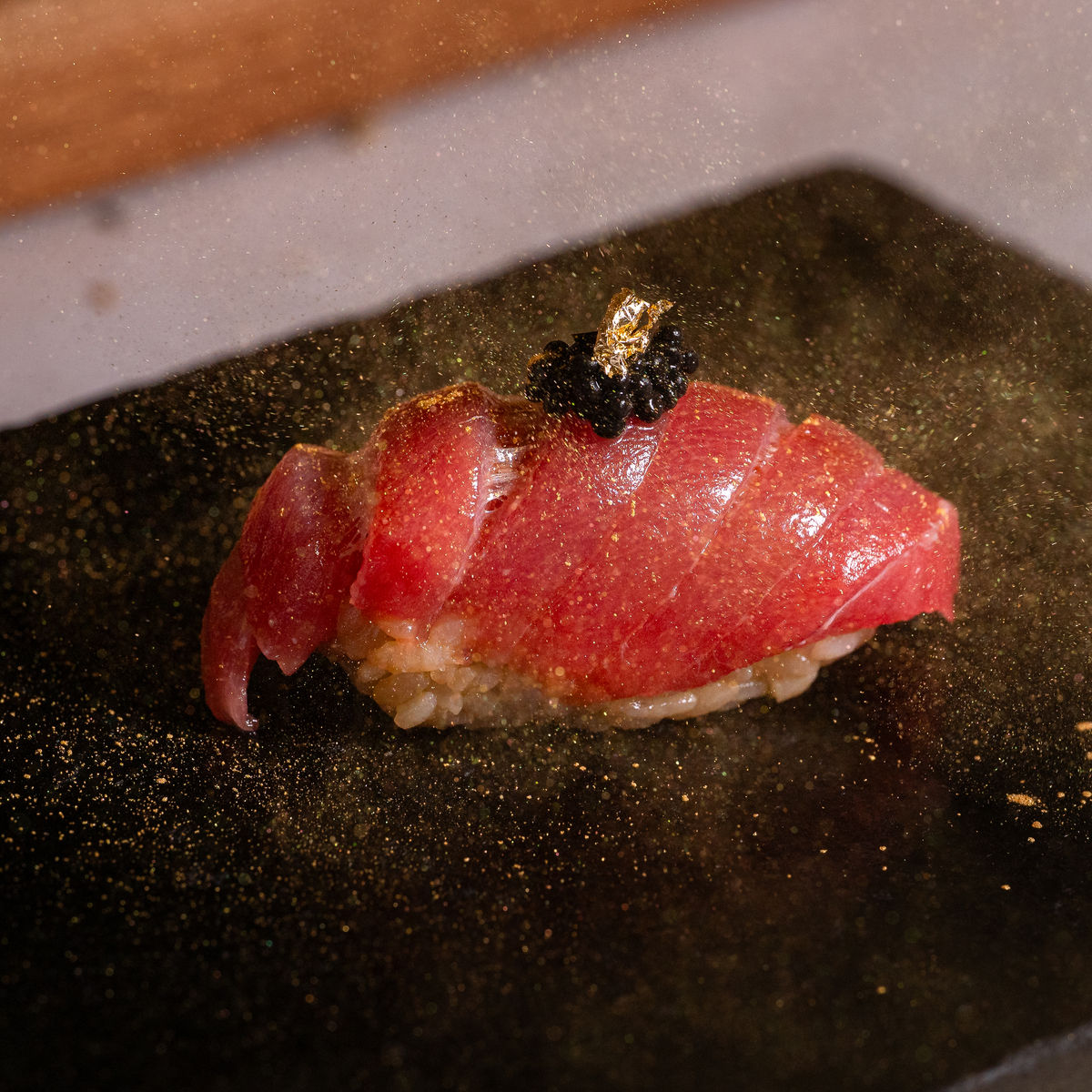
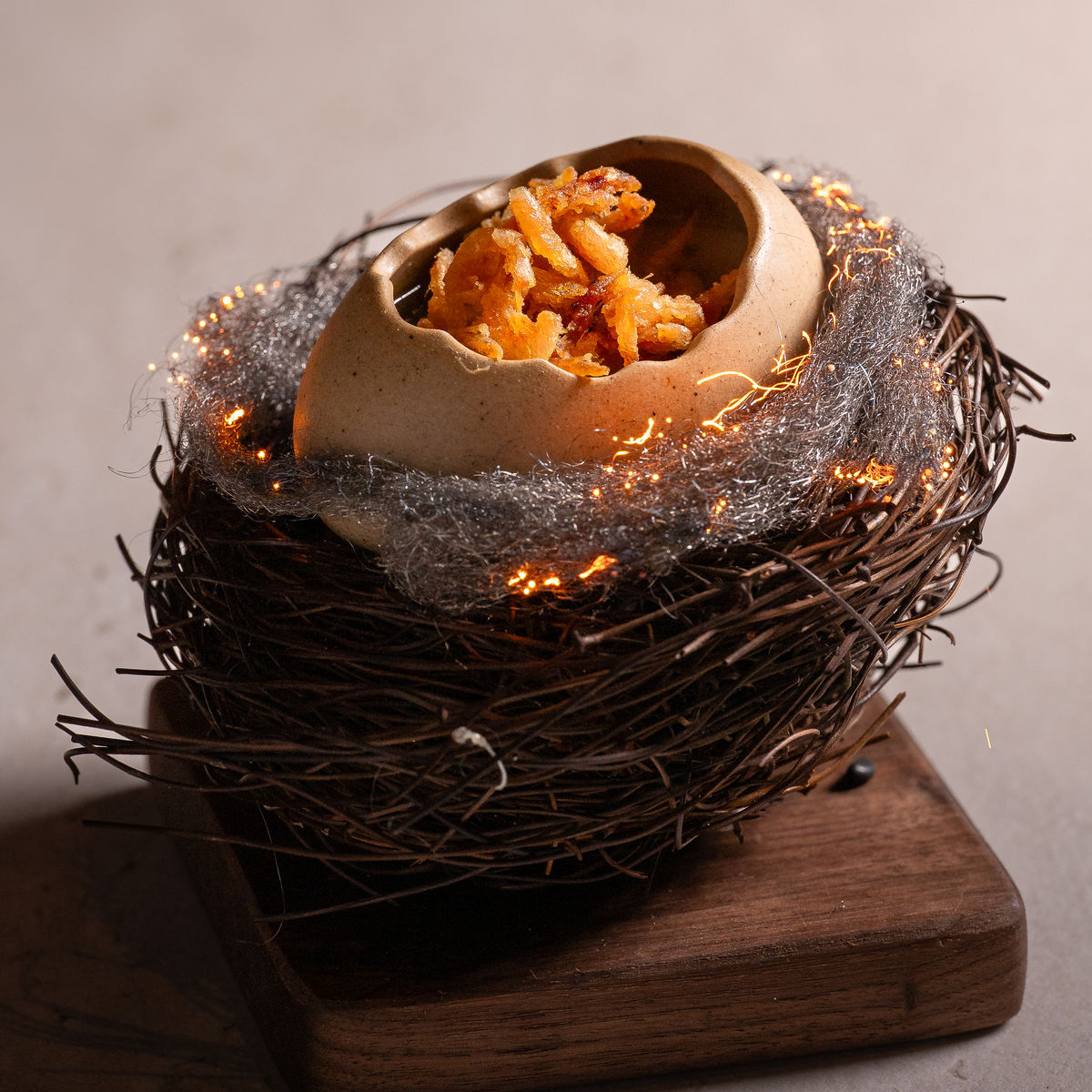
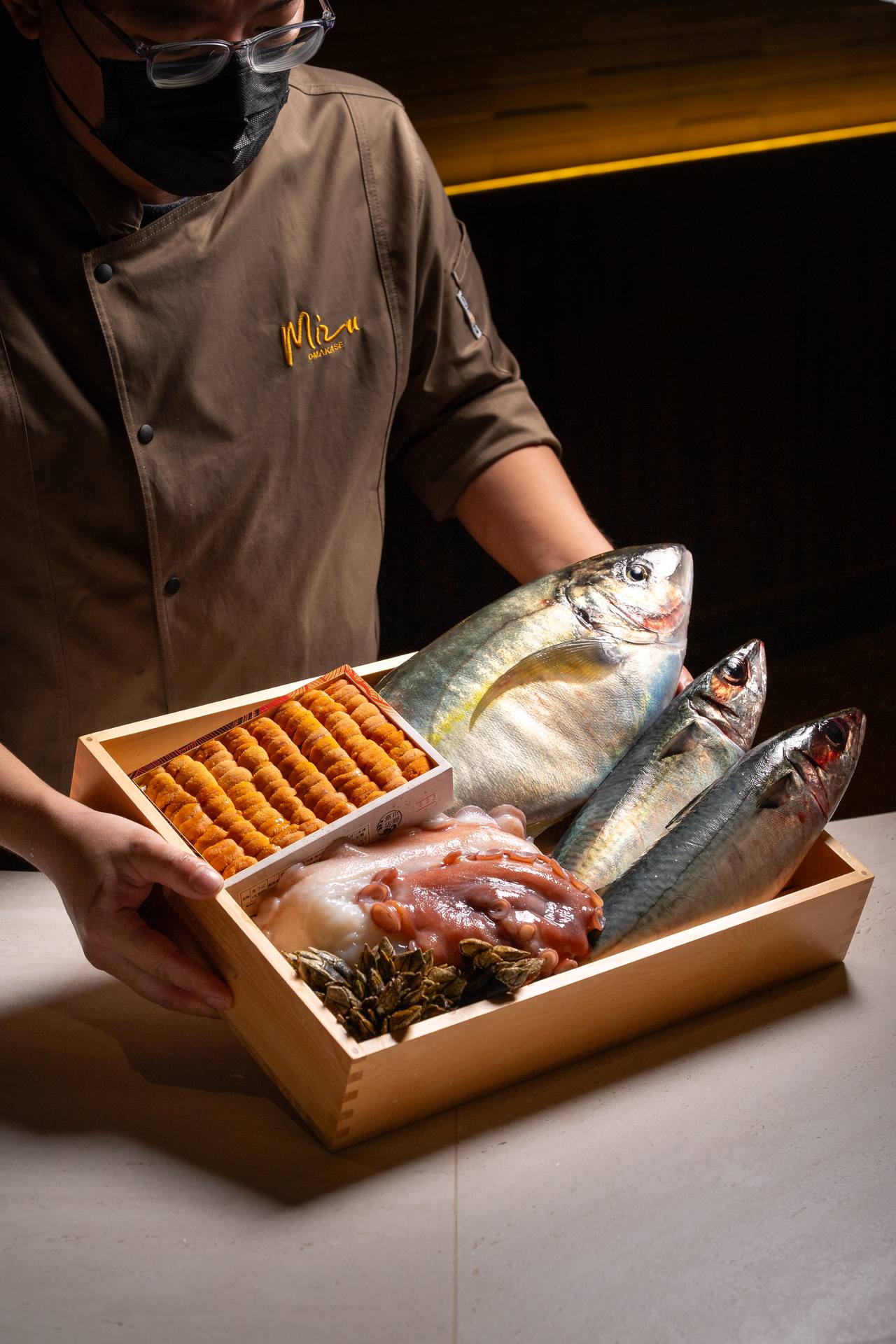
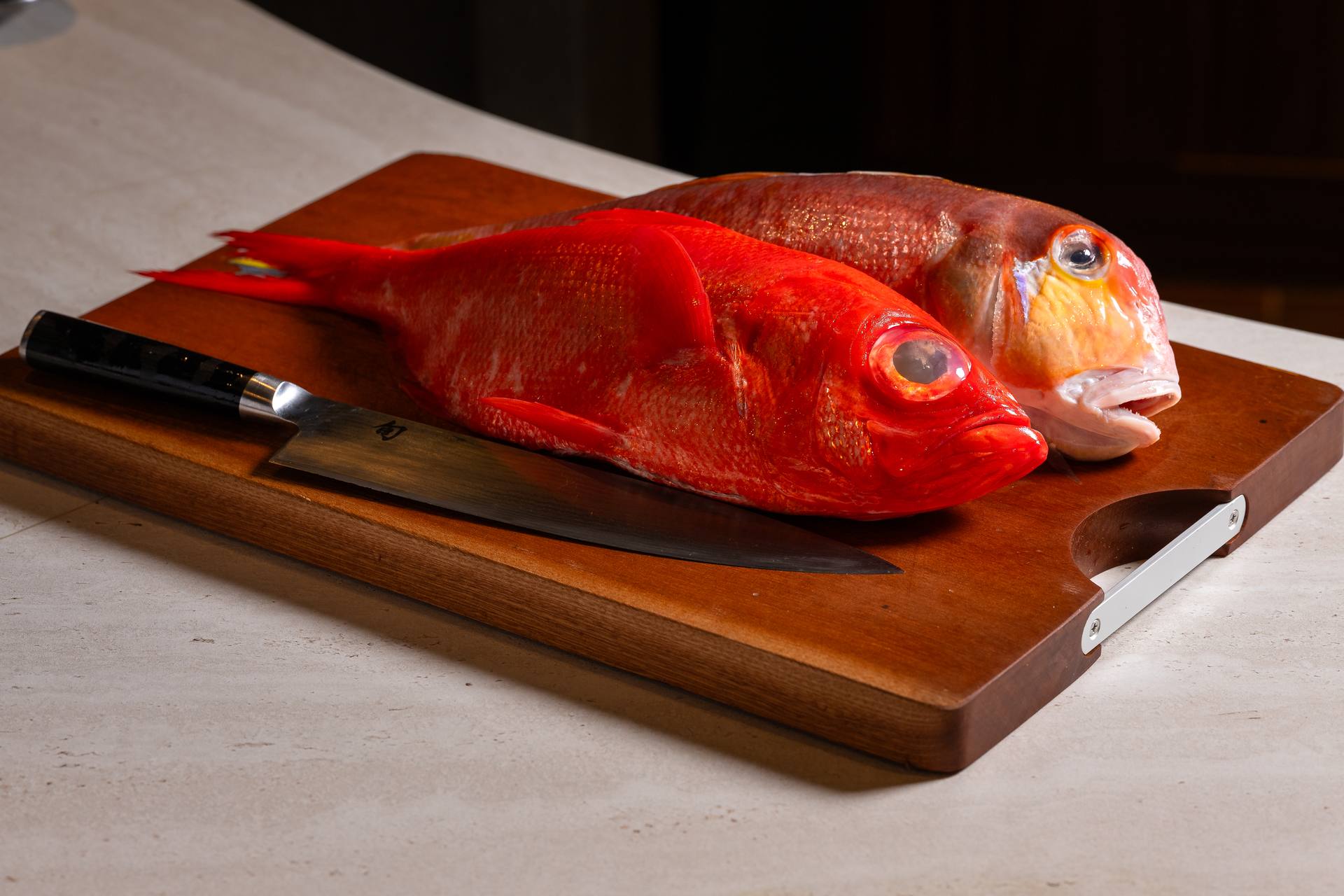
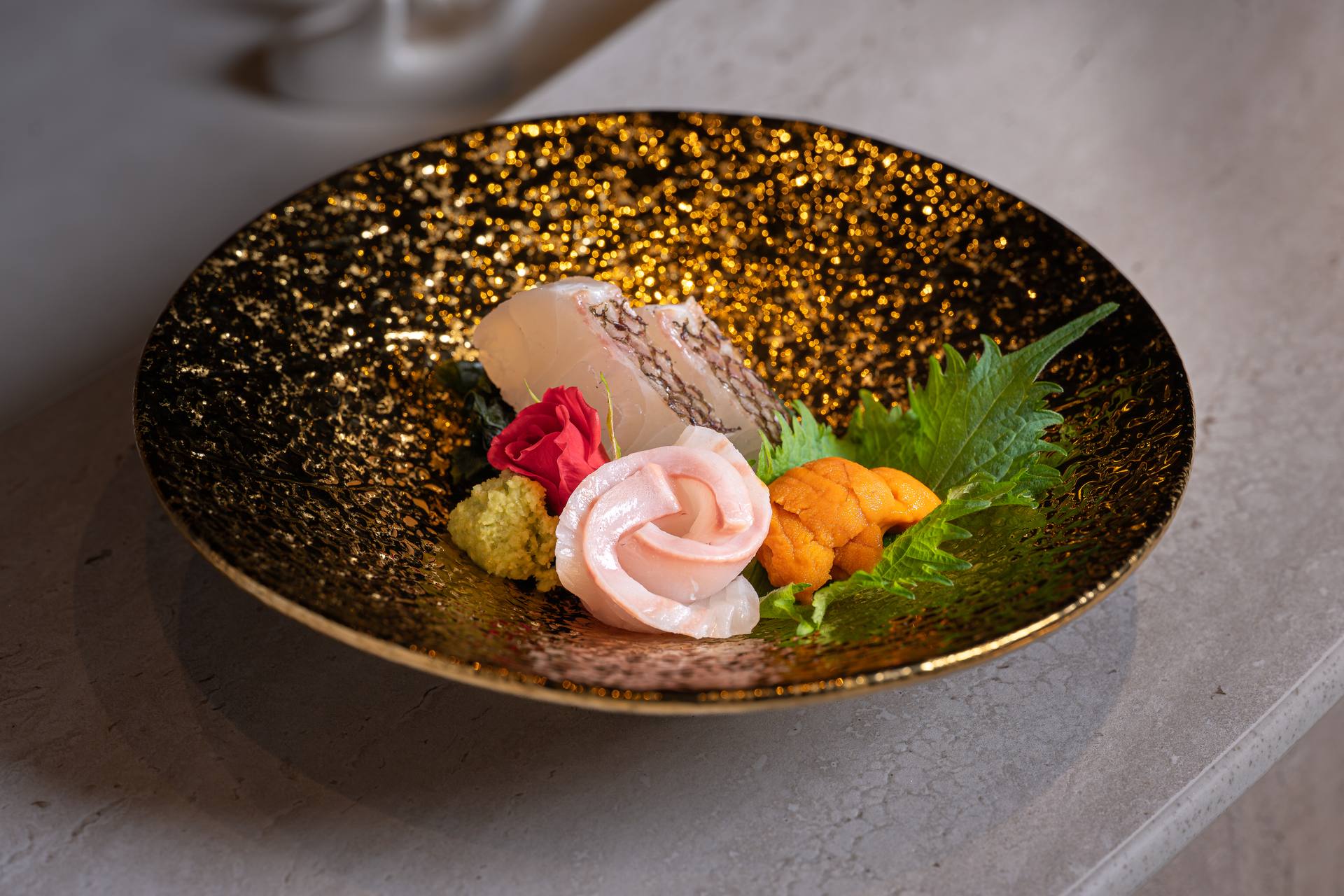
Every course served at Mizu answers to the season. In spring, the first sakura salt and mountain vegetables. In summer, cool hamo and icefish. In autumn, matsutake and aged kinmedai. In winter, blue-fin at its heaviest fat. What arrives on the morning of your visit decides what appears on your plate that evening — never the other way around.
It is a practice of listening: to the fishermen, to the farmers, to the weather, to the day itself. It asks something of our guests, too — a willingness to arrive without expectation, and to leave having been surprised.